
Sumo Morning Keiko Experience
Witness the power, discipline, and spirit of Japan’s national sport up close.
Overview
Sumo, Japan’s national sport, is more than a competition of strength —
it is a living tradition shaped by discipline, respect, and deep ties to Shinto ritual.
For centuries, wrestlers have trained in stables where they live, eat, and devote themselves entirely to the sport.
Stepping inside a sumo stable offers a rare chance to witness this world from the front row — something few travelers ever experience.
Morning practice, known as Asageiko, begins early when most of the city is still quiet.
Within the stable, the atmosphere is tense yet sacred — the sound of stomps echoing across the practice ring,
the collision of bodies, the friction of feet against clay, and the powerful breathing of wrestlers locked in training.
endurance training, stretching, practice bouts, and the strict hierarchy that guides daily life in the stable.
Young wrestlers push themselves to their limits while seniors set the pace with experience and authority.
It is not merely a spectacle — it is a window into dedication, perseverance, and the spirit of sumo.
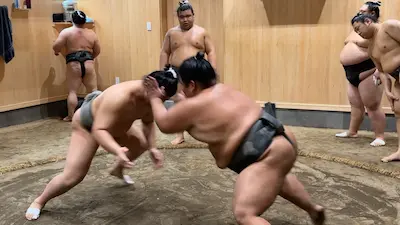
The Spirit of Sumo
- Training starts early — discipline is the foundation
- Wrestlers dedicate their lives to physical and mental strength
- Respect and hierarchy shape the stable community
- Rituals and traditions connect sumo to centuries-old Shinto culture
Sumo Asageiko lets you feel this world with your own eyes and ears —
the sound of bodies colliding, the rhythm of footwork on the clay,
and the intense focus of wrestlers pushing beyond their limits.
What You will Experience
①Close-Up Training Observation
Watch morning practice from a short distance — intense, raw, powerful.
②Warm-ups & Stretching Routine
See how rikishi prepare their bodies and find balance through repetition.
③Practice Matches & Sparring
Feel the impact, speed, and strategy behind every clash.
④Hierarchy & Stable Life Insight
Learn how seniority, respect, and roles shape daily life in the heya.
⑤Meet & Greet Opportunity)
Photos & conversation may be possible after training.
⑥Cultural Stories from Your Guide
History of sumo, lifestyle, diet, and seasonal tournament insights.
⑦Chanko Nabe Meal with Rikishi
After practice, enjoy authentic chanko nabe, the protein-rich hotpot that fuels sumo wrestlers daily.
Taste the same meal the wrestlers eat, freshly prepared and full of flavor — a rare chance to experience sumo culture through food.
A warm bowl of chanko is the perfect ending to a powerful morning.

Recommended Highlights of Sumo Morning Practice
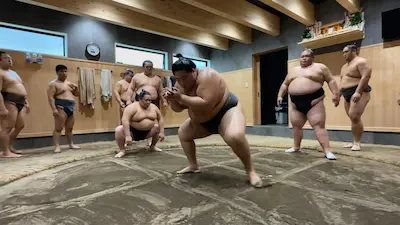
Powerful Training & Sparring
Witness the intensity of practice — body slams, footwork drills, and sparring that fills the room with energy.
Feel the raw power of wrestlers pushing their limits every morning.

Hierarchy & Daily Discipline
Sumo is built on strict hierarchy. Young wrestlers serve seniors, clean the stable, and work hard to earn respect.
A rare look into the social structure behind the sport.

Rituals & Shinto Traditions
Sumo is deeply connected to Shinto.
Watch respectful bows, rituals, and movements passed down for centuries — more than a sport, it’s culture.
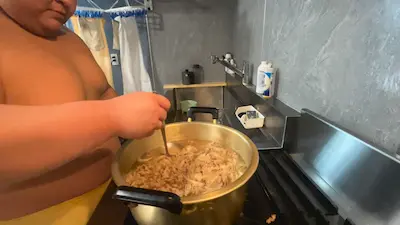
Chanko Nabe & Stable Life
Taste the same chanko nabe wrestlers eat after training.
Experience sumo not only through sight, but flavor — warm, rich, and full of protein.
The Sumo Asageiko experience we offer
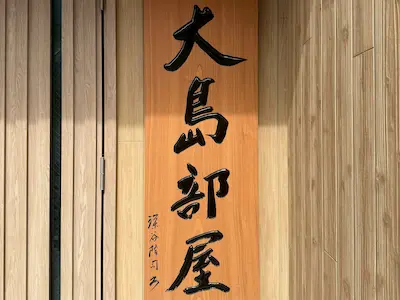

Duration: about 2 hours
Meeting Point: JR Shin-Koiwa Station
Guide: English support available
Meal Included: Chanko Nabe
◆ Close-up morning practice observation
◆ Watch warm-ups, drills & sparring inside the stable
◆ Enjoy authentic chanko nabe — the wrestlers’ daily meal
◆ Q&A with rikishi + photo session
◆ Optional free drop-off to Tokyo Skytree
➤ Check out the tour details and book now
What You Will Receive
With our guided tour, you will enjoy
• Easy meeting point at Shin-Koiwa Station at 9:00
• 10-minute taxi to Oshima-beya Stable with staff escort
• Close observation of real morning practice (Asageiko)
• Learn about hierarchy, lifestyle, rituals & culture
• Chanko nabe meal served inside the stable
• Q&A time + Photo session with wrestlers
• Optional transport to Tokyo Skytree after the tour
Sample Schedule
09:00 Meet at JR Shin-Koiwa Station
09:10 Oshima-beya Stable with the guide
09:15 Observe morning practice up close — stretching, footwork, bouts
10:00 Enjoy authentic chanko nabe lunch
10:40 Q&A with wrestlers + Photo time
11:00 Tour ends
If you wish, a guide will take you to Tokyo Skytree.